
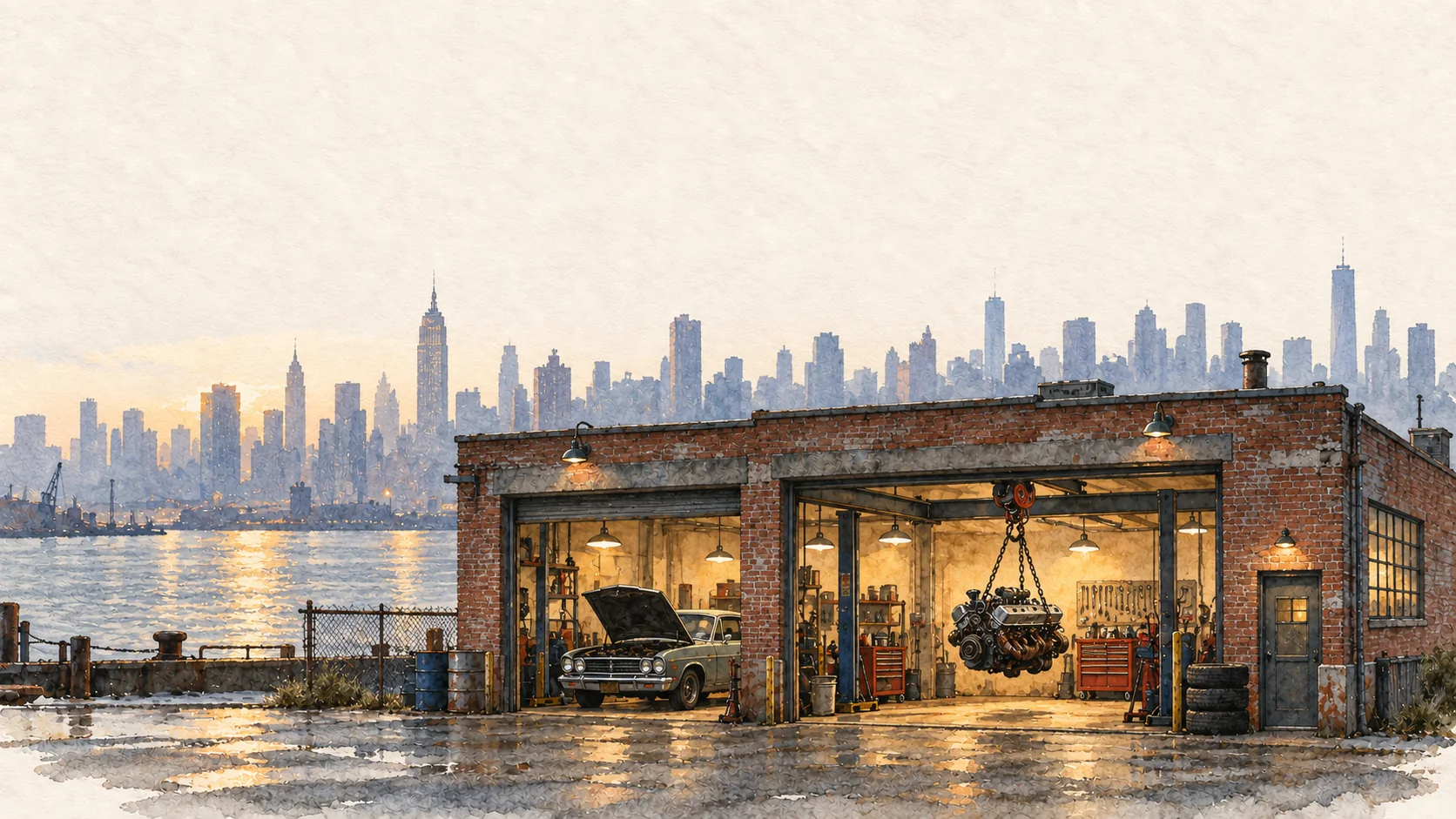
You can changethe engine
Waiting for a better AI model can postpone the learning that would make it useful.
It is easy to talk yourself out of building something when the next AI model might make the work unnecessary.
The “wait calculation”, is what Ethan Mollick calls it. If technology is improving quickly enough, someone who starts later might finish before you. I liked his interstellar voyage example: a ship launched today could eventually be overtaken by a faster ship that left years later.[1]
It's pretty unnerving really, when you're trying to decide where to spend the next few months.
I liked one of the comments on the article: A project already underway can adopt a better model. It can bring along the understanding of the problem, the data it has gathered, and the ways it has learned to judge the result.[1]
You can change the engine!
Nothing is fixed in this crazy world, so why accept your current trajectory, speed, motion?
Mollick describes spending years building teaching games before AI made much of their implementation easier. He also ack'd:
“We could never have built these tools if we didn’t do the hard intellectual work of learning how to make them with our own limited human abilities first.”[1]
The implementation became easier to replace. The work had still taught them something they needed.
That's why going through the paces with agent workflows for specific business problems is still important, in my opinion. You gotta get the agent traces, the data, the systems of intelligence down. It's just hard and nitty-gritty work. At some point someone else comes along and can use that and go faster, that's the unnerving part.
Of course, changing models is not necessarily effortless. The replacement needs testing. Some work may have to be redone. Spending months compensating for a limitation that could soon disappear deserves scrutiny!
Fear of that waste can make all effort look equally disposable. Understanding what customers mean, watching where employees hesitate, and learning what makes a result useful belong in the calculation too.
If a better model arrived tomorrow, which parts of this project would I be glad we had already done?
If I change out the engine, or even re-do a large swath of things, can I move even faster with all these learnings we've gone through?
What can't the other guy do or what doesn't he know, as he's speeding by me?
Just questions I'm pondering right now.
Sources
[1] https://www.oneusefulthing.org/p/the-lazy-tyranny-of-the-wait-calculation — Ethan Mollick’s essay and Malcolm Sharpe’s comment.